GPI Gout Anatomical
( Brand: Gpi ), ( Manufacturer Part Number: GOUT ), ( Model: 1985 )
Review GPI Anatomical Foot Model
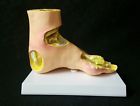
The GPI 1985 Gout Anatomical is an exquisitely detailed and anatomically accurate model designed to provide a comprehensive understanding of the gout-affected joint. This model, produced by GPI, is a valuable educational tool for medical students, healthcare professionals, and anyone with an interest in human anatomy and its related diseases.
The model highlights the specific areas of the joint that are typically affected by gout, a form of arthritis that is characterized by the buildup of uric acid crystals in the joints. The model showcases the big toe (hallux) and surrounding structures, including the first metatarsal bone, phalanges, and the joint capsule.
One of the standout features of this model is its intricate depiction of the uric acid crystals. These crystals, which appear as sharp, needle-like structures, are shown to have accumulated within the synovial fluid-filled spaces of the joint, causing inflammation, pain, and swelling.
The GPI 1985 Gout Anatomical model is made from high-quality, durable materials, ensuring it can withstand frequent handling and examination. Its detailed surface textures and lifelike coloration contribute to a realistic representation of the affected joint. The model is also easily cleanable, ensuring it remains hygienic for repeated use.
In addition to its educational value, this model is also a powerful tool for empathy and understanding in patient care. By visually demonstrating the impact of gout on the body, healthcare professionals can better explain the condition to their patients, helping to foster a more compassionate and informed patient-doctor relationship.
Overall, the GPI 1985 Gout Anatomical model is an essential resource for anyone seeking a deeper understanding of the gout-affected joint. Its detailed design, high-quality construction, and educational value make it an invaluable tool for medical education and patient care.
Pros of buying a GPI 1985 Gout Anatomical Model:1. Detailed Anatomy: This model provides a comprehensive and detailed view of the anatomy of the foot, specifically focusing on the joint affected by gout. It can be a valuable learning tool for medical students and professionals.
2. Durable: Made from high-quality materials, this model is known for its durability and longevity. It can withstand regular handling and use without losing its shape or clarity.
3. Realistic: The 1985 Gout Anatomical Model is designed to replicate the actual human anatomy as closely as possible. This can help medical professionals to better understand and diagnose gout-related issues.
4. Portable: Despite its size, the model is relatively lightweight and easy to carry, making it a convenient study tool for both home and clinical settings.
Cons of buying a GPI 1985 Gout Anatomical Model:1. Price: Compared to other anatomical models, the GPI 1985 Gout Anatomical Model is quite expensive. This might be a deterrent for some potential buyers with a limited budget.
2. Size: Although portable, the model is quite large and might not fit into all carrying cases or bags. This could make it difficult to transport if you're often on the move.
3. Single Focus: The model only focuses on the gout-affected joint of the foot. While it provides a detailed view of this specific area, it might lack the broader anatomical context that other models offer.
Conclusion:The GPI 1985 Gout Anatomical Model is a high-quality, detailed, and durable tool that can be beneficial for medical professionals and students who want to gain a deeper understanding of gout-related foot issues. However, its high price and large size might be prohibitive factors for some potential buyers. If you're looking for a more comprehensive anatomical model or have a tight budget, you might want to consider other options.
Recommendation:If you're specifically interested in gout-related foot issues and can afford the price, the GPI 1985 Gout Anatomical Model is a valuable addition to your study tools. However, if you're looking for a more general anatomical model or are on a tight budget, you might want to consider other options that offer a broader scope at a lower price point.
Details:
Model size 8 x 4/6 card size 6 base also shows inflammation, redness and swelling of surrounding tissue, displaced tendons, bone erosion. Gpi Gout anatomical foot model illustrates Gouty topi at first metatarsal-phalanges joint, in the ankle, and around Achilles tendon. Cross sections of the leg, ankle, talus and heel show musculature, nerves, bones, tendons, cartilage joints foot.
specifications ophthalmologysupplyie:
- brand: Gpi
- mpn: Gout
- model: 1985
Returns ophthalmologysupplyie:
- policy: no returns
Shipping ophthalmologysupplyie:
- handling: 2 days
- type: Calculated
Offer ophthalmologysupplyie:
- quantity: 1
- Started: March 4, 2017, 6:05 am
- Sold: 0
- best offer: true
- bids: 0
Seller ophthalmologysupplyie:
- city: Saint Louis, Missouri
- zipcode: 63144
Ratings:
- EXCELLENT A 02-28-17
- Thank you! 03-02-17
- Great addition to my collection.Looking to buy more in time. Fast delivery grea 03-01-17
- ! 03-02-17
- great seller 03-03-17
Payments ophthalmologysupplyie:
- PayPal
General ophthalmologysupplyie:
- condition: New other see details
- business industrial > healthcare lab life science > medical specialties business industrial > ophthalmologyoptometry
- in stock: Yes
